
3‑inch TRAINING FPV Cinewhoop Drone Full Review|Beginner‑Oriented Duct‑Protected FPV Trainer
Review Introduction This review covers the 3‑inch TRAINING FPV cinewhoop drone, a duct‑protected quadcopter built for FPV education and confined‑space indoor flights. We evaluate hardware build quality, real‑world flight performance, video & radio link, pros &…
Review Introduction
This review covers the 3‑inch TRAINING FPV cinewhoop drone, a duct‑protected quadcopter built for FPV education and confined‑space indoor flights. We evaluate hardware build quality, real‑world flight performance, video & radio link, pros & cons and practical use‑cases, to show its true capabilities and limitations for procurement reference.
Hardware & Build Overview
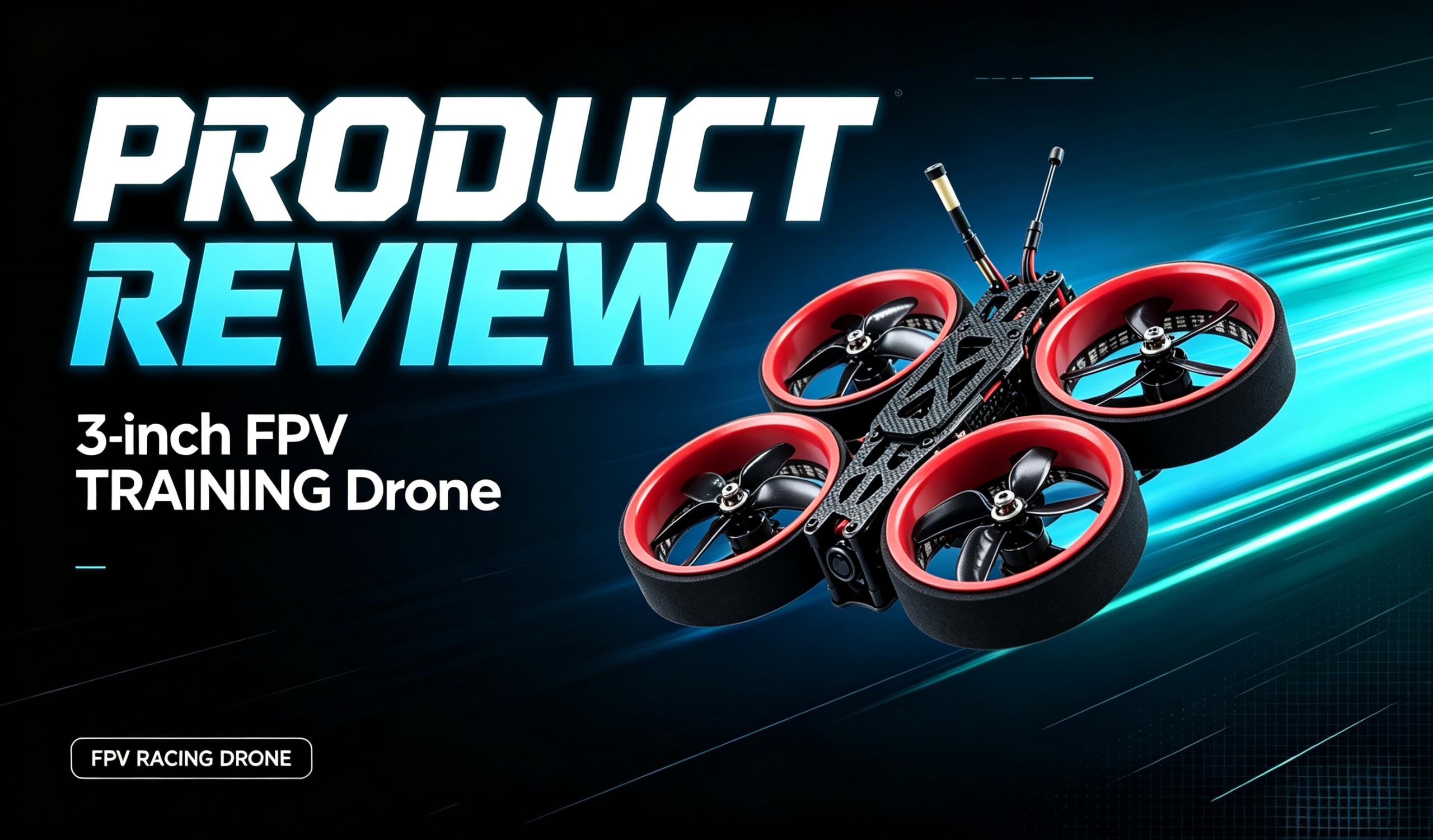
Wheelbase 145 mm, frame dimension 93111 mm, weight ≈0.3 kg (battery excluded). Red foam duct guards fully enclose propellers, classic cinewhoop configuration. ‑Flight Controller: F722 with ICM42688P gyro, standard 30.530.5 mounting hole, mature widely‑used FPV stack, supports 2‑6S wide‑voltage input. ‑ESC: Optional 20A / 45A / 50A. 20A for mild training; 45‑50A delivers stronger thrust for intermediate pilots. ‑Power Unit: 1507 motor KV2700 (customizable KV), paired with GEMFAN D75 MMS‑2 propellers. ‑Camera & VTX: 1700TVL /1800TVL analog FPV camera with 1/2.7″ Starlight CMOS sensor; 5.8G VTX adjustable 20‑600 mW. ‑Radio: ELRS 2.4G receiver with RHCP high‑gain antenna. ‑Payload: Zero payload capacity, no external modules can be mounted.
Build quality meets training‑grade standards. Components are mainstream and easy to source as spares. Foam duct rings are consumable parts and will crack after repeated heavy crashes.
Indoor & Outdoor Flight Test
Test setup: 6S 800‑900 mAh lipo battery, tests carried out in open outdoor area and enclosed indoor warehouse.
- Endurance Official flight time: 5‑8 min. ‑Gentle hovering & slow training: 7‑8 min achievable. ‑Active maneuver practice: real flight time drops to 4‑5 min.
Review note: 5‑8 min is ideal hover value. Aggressive flying reduces endurance. Plan mission time around 5 minutes for training sessions.
- Duct‑guard crash‑protection performance Ducts absorb impact during low‑speed indoor collisions, protecting propellers effectively in multiple crash tests.But high‑speed hard impacts still cause damage: Foam rings may tear, motors and frame can still break. Ducts reduce damage risk, they do not make the drone indestructible. Aerodynamic drag from ducts reduces agility and top speed compared to non‑ducted freestyle quads, not designed for aggressive freestyle.
- Video latency & image quality Claimed video latency ≤30 ms. In short‑range indoor tests latency is acceptable for immersive FPV piloting. Starlight CMOS performs well under low‑light dusk / dim indoor conditions. Important limitation: it is analog‑only, no HD recording, not for aerial photography or evidence capture. Adjust VTX power: low power indoors to avoid interference, higher power for open‑air outdoor flights.
- ELRS 2.4G radio performance Stable signal under line‑of‑sight outdoor conditions. In warehouses with walls and metal obstacles, signal attenuation, frame drop and link risk appear.
Review note: Not for beyond‑obstacle long‑distance flight. Always keep visual line‑of‑sight indoors.
- ESC power comparison ‑20A ESC: Soft throttle response, minimal sudden burst, best for absolute beginners. ‑45A/50A ESC: Strong throttle punch for quick maneuvers, better for pilots with prior FPV experience; beginners may over‑throttle and crash easily.
Key Strengths
✅ Duct‑ring safety design, greatly cuts maintenance cost for indoor training, education‑friendly.
✅ Mature F722+ICM42688P stack, widely available spare parts.
✅ Starlight sensor delivers solid low‑light performance for dim indoor / dusk environments.
✅ Multiple ESC power options to match pilot skill levels.
✅ Lightweight and portable, works in classrooms and warehouses with minimal site requirements.
Real‑World Weaknesses Found In Test
❌ Zero payload capacity, cannot mount any mission modules, purely for flight training only.
❌ Duct drag reduces agility, unsuitable for high‑intensity freestyle aerobatics.
❌ ELRS 2.4G link suffers attenuation behind obstacles; not for long‑range BVLOS missions.
❌ Analog‑only video, no HD recording capability.
❌ Foam duct rings are consumables, require regular replacement after heavy use.
❌ Requires FPV tuning out‑of‑the‑box; not a true plug‑and‑play toy‑grade drone.
Who Should / Should Not Buy This Drone
👍 Good fit for:
- Absolute‑beginner FPV pilot skill building
- Educational institutions for hands‑on FPV courses
- Indoor / warehouse / confined‑space flight practice
- Users prioritizing crash‑safety and lower repair cost.
👎 Not suitable for:
- Payload‑carrying, cargo‑drop or operational missions
- Multi‑kilometer long‑range flights
- High‑definition aerial recording or evidence capture
- High‑speed aggressive freestyle flying.
Final Review Verdict
The 3‑inch TRAINING FPV is a purpose‑built FPV training platform rather than an operational work‑grade UAV. Its core value comes from duct‑ring safety, which minimizes crash‑related damage for indoor and educational training. The hardware stack is proven and spare parts are easy to obtain. Manage expectations: zero payload, moderate flight time, maneuver performance limited by duct drag. It excels at pilot training, not operational tasks. If your main requirement is FPV teaching & skill practice, this unit is worth consideration. For real‑world operational missions look at models such as Lion7.
Product Page:https://iuavofficial.com/product/3‑inch‑fpv‑training‑drone/