
DJI Mavic 3 Thermal Review | Dual-Sensor Thermography, 45min Endurance, Lightweight Industrial Flagship
Review Introduction The DJI Mavic 3 Thermal (M4T) is DJI’s lightweight flagship thermal imaging drone for industrial applications. It integrates a 20MP visible-light camera and a high-performance infrared thermal camera, supporting professional thermometry functions including spot…
Review Introduction
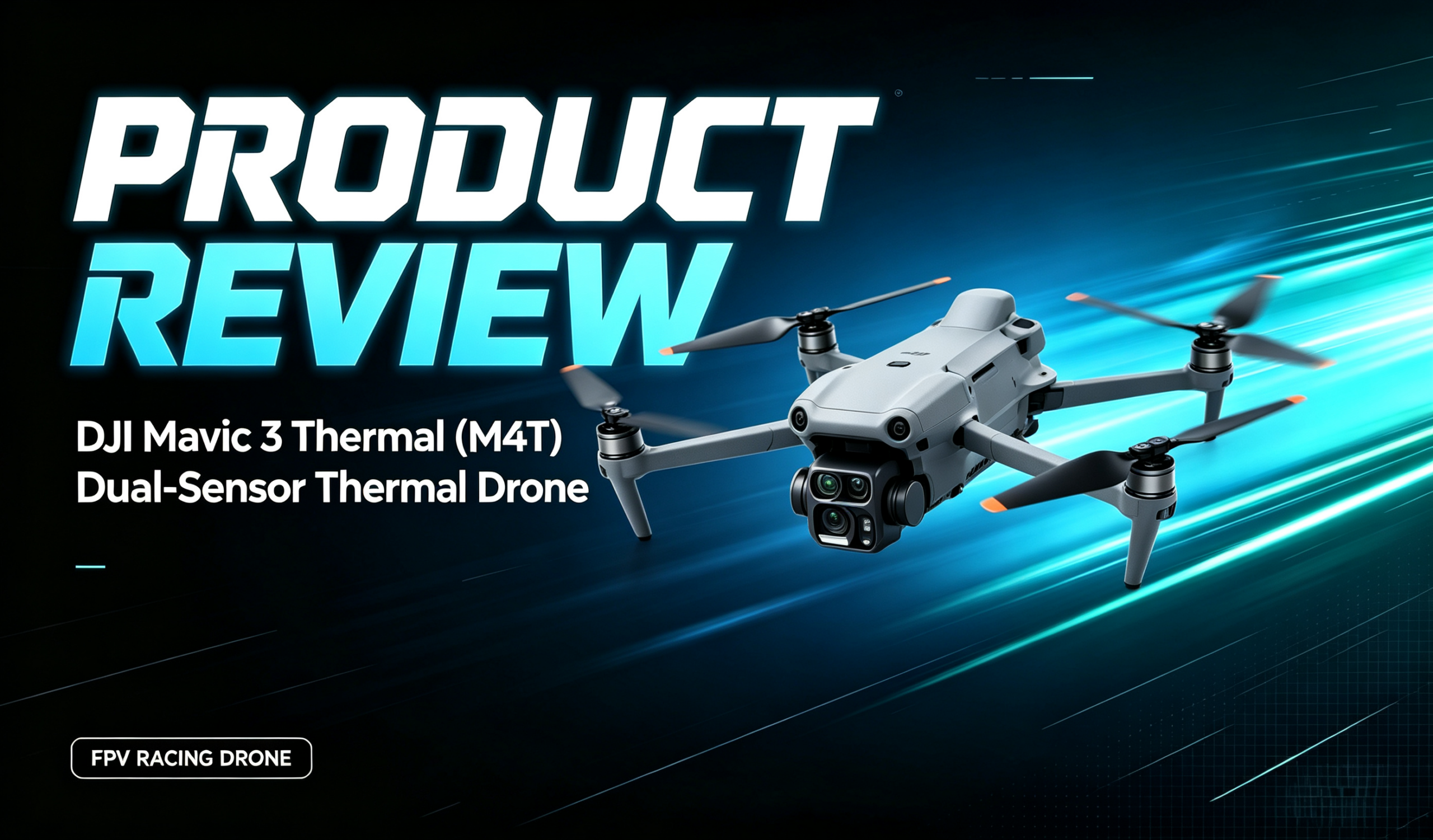
The DJI Mavic 3 Thermal (M4T) is DJI’s lightweight flagship thermal imaging drone for industrial applications. It integrates a 20MP visible-light camera and a high-performance infrared thermal camera, supporting professional thermometry functions including spot metering, area temperature measurement, max/min temperature tracking and isotherm analysis. Paired with the classic foldable airframe, omnidirectional obstacle avoidance, O3+ industrial video link, 45-minute long endurance and optional RTK centimeter-level positioning, it is widely used in power inspection, fire emergency, search & rescue, solar farm detection and building energy audit. This hands-on review analyzes the imaging & thermometry system, obstacle avoidance, endurance & link, positioning expandability and real-world pros & cons to evaluate its true operational capability for professional inspection and emergency procurement.
Hardware Breakdown
Dual-Sensor Imaging & Professional Thermometry
Dual visible + thermal sensor system with picture-in-picture display and dual synchronous recording:
- Visible camera: 4/3-inch CMOS, 20MP effective pixels, 4K/30fps video recording.
- Thermal camera: 640×512 VOx uncooled detector, 12μm pixel pitch; dual temperature ranges: -20℃~150℃ low range / 0℃~500℃ high range; accuracy ±2℃ or ±2% of reading (whichever is greater).
- Professional functions: spot metering, area temperature detection, auto max/min temperature tracking, isotherm analysis.
Review notes: 640-resolution thermal imaging is entry-level professional grade, far superior to consumer thermal solutions, and meets the thermometry needs of most industrial inspections. Dual ranges cover ambient to high-temperature scenarios, suitable for power insulator inspection, solar hot-spot detection and fire source location. Spot, area and tracking functions cover core industrial thermometry demands; picture-in-picture enables simultaneous scene observation and temperature mapping for high operational efficiency.
6-Way Omnidirectional Visual Obstacle Avoidance
6-direction vision sensing system with APAS 5.0 advanced pilot assistance system, autonomously navigates around obstacles in complex terrain and urban environments. Review notes: DJI’s visual OA algorithm is mature and reliable. In good lighting, it accurately detects buildings, trees and power towers with smooth avoidance logic, greatly reducing crash risk and pilot workload in complex environments. However, the vision-only system is affected by light and visibility. Performance degrades noticeably at night, in heavy fog and dust — the key difference from millimeter-wave OA systems.
Endurance, Link & Flight Performance
- Endurance: up to 45 minutes with standard intelligent battery in no-wind conditions; hot-swappable battery design.
- Flight performance: 21m/s max horizontal speed (Sport mode, no wind), 12m/s max wind resistance (Level 6 wind), 6000m max takeoff altitude.
- Video link: O3+ industrial digital link, up to 15km (FCC) / 8km (CE), 1080p/30fps HD live view, strong anti-interference.
Review notes: 45-minute endurance is top-tier among foldable portable thermal drones. Hot-swap batteries quickly extend continuous operation time for long field inspections. The O3+ link performs stably in suburban and industrial electromagnetic environments, with 15km range covering large corridor inspection and area patrol missions.
Positioning System
Standard GPS+GLONASS dual-mode positioning; optional original DJI RTK module for centimeter-level accuracy and precise waypoint planning. Review notes: dual-mode GPS is sufficient for routine inspection and emergency scenarios. RTK can be added for professional surveying, fine inspection and repeatable flight paths, offering flexible scalability that balances routine cost and high-precision demand.
Airframe Design & Protection
- Design: classic Mavic foldable form factor, folded size 221×96.3×90.2mm, takeoff weight ~920g (with standard battery).
- Protection: IP44 dust & splash resistant, operating temperature -10℃~40℃.
Review notes: compact when folded, fits in a professional backpack, easily carried by one person and rapidly deployed on site — ideal for emergency response and mobile inspection missions. IP44 protection handles field dust and short light rain for routine outdoor operations.
Flight Test Performance
Imaging & Thermometry Test
Visible light: 20MP resolution delivers good detail, 4K video is sharp with accurate color reproduction, meeting inspection detail recording and documentation requirements. Thermal performance: 640-resolution thermal image is clear with smooth temperature gradients. Dual range switching is smooth; low range for ambient and building thermometry, high range for power and fire detection. Spot and area readings are accurate; auto hot/cold tracking automatically locks onto targets, highly practical for fire source location and power equipment inspection. Picture-in-picture and dual recording simplify synchronous scene and temperature documentation.
Obstacle Avoidance Test
Good-light outdoor scenes: accurately detects buildings, trees and power towers with smooth auto-avoidance paths. APAS 5.0 is mature and reliable, effectively reducing pilot workload in complex sites. Low-visibility scenes: at night, in fog and dust, visual sensors are degraded, detection range shortens and sensitivity drops. Manual override is required in extreme conditions.
Endurance & Link Test
With standard battery in no-wind hover, real endurance approaches 45 minutes. Typical operational flight (with maneuvering and wind resistance) delivers 38–42 minutes, matching official specs. In open unobstructed areas, FCC version control and video range approaches 15km with stable low-latency signal in suburban and industrial environments. Range decreases reasonably in dense urban and obstructed terrain.
Portability & Deployment Test
Compact when folded, under 1kg weight, easily carried as a backpack. Fast setup from case to takeoff, well suited for emergency rescue and mobile inspection rapid-response scenarios.
Key Strengths
✅ Mature dual-sensor system with full thermometry features: 640 thermal + 20MP visible, dual-range high-accuracy thermometry covering all industrial scenarios.
✅ 6-way visual OA with mature algorithm: APAS 5.0 assistance for reliable auto-avoidance in complex environments, high safety and fault tolerance.
✅ 45min long endurance + hot-swap: excellent endurance, quick battery swap for extended continuous operation.
✅ O3+ industrial long-range link: 15km range, strong anti-interference, stable in complex industrial electromagnetic environments.
✅ Optional RTK flexible expansion: GPS for routine work, add RTK for high-precision scenarios, balancing cost and professionalism.
✅ Extremely foldable & portable: classic Mavic design, small and light, single-person carry, rapid deployment for emergency scenarios.
Identified Limitations
❌ Vision-only OA limited in bad weather: performance degrades at night, in fog and dust. Less all-weather capability than millimeter-wave systems.
❌ RTK is optional, adds cost: original RTK module sold separately, increasing total cost for high-precision operations.
❌ No extra payload capacity: reconnaissance & inspection only, cannot mount additional mission payloads. Less expandable than payload-capable industrial drones.
❌ Entry-professional thermal resolution: 640 resolution meets routine inspection; insufficient for scientific-grade ultra-fine thermometry and ultra-long-range measurement.
❌ Moderate IP44 protection: dust and splash resistant, okay for light rain; not for heavy rain, submersion or corrosive environments.
Suitable & Unsuitable Scenarios
👍 Best for:
- Power line insulator temperature measurement, transmission & substation inspection.
- Solar farm hot-spot detection and module fault diagnosis.
- Fire reconnaissance, heat source location, forest fire monitoring.
- Emergency search & rescue, field personnel search.
- Building facade heat loss inspection, pipeline leak detection.
- Night security patrol, border corridor monitoring.
- Water conservancy inspection, emergency disaster reconnaissance.
👎 Not recommended for:
- Scientific-grade precision thermometry and ultra-fine thermal analysis.
- Heavy rain, submersion and highly corrosive environments.
- Missions requiring additional mission payloads.
- Extreme high-altitude operations above 5000m.
- Pure consumer recreational aerial photography (poor value).
Side-by-Side Comparison
| Item | DJI Mavic 3 Thermal (M4T) | G330 Thermal Drone | GDU S400E |
|---|---|---|---|
| Positioning | Lightweight flagship thermal inspection | Entry-level industrial dual-sensor | Industrial flagship payload inspection |
| Airframe Material | Carbon + engineering plastic | Carbon / plastic | Magnesium alloy |
| Mission Payload | Reconnaissance only | Light reconnaissance | Up to 3kg |
| Obstacle Avoidance | 6-way visual APAS 5.0 | 6-way visual | Millimeter-wave + binocular full |
| Thermal Spec | 640×512 dual-range professional | 1080p | 1K professional |
| Positioning | GPS + optional RTK | Standard GPS | RTK ±0.1m hover |
| Endurance | 45min | 40min | 49min |
| Core Advantage | Portable, mature, full thermometry | Dual-sensor OA, great value | Heavy payload, all-weather OA, swarm |
| Best For | Light professional inspection, emergency response | Entry-level dual-sensor inspection | Industrial flagship, payload & cluster |
Final Review Verdict
The DJI Mavic 3 Thermal (M4T) is a mature, well-balanced lightweight flagship thermal industrial drone. Its dual-sensor system with complete professional thermometry, mature 6-way visual OA, 45-minute endurance, 15km long-range link, excellent portability and optional RTK expansion make it ideal for light professional inspection scenarios like power inspection, fire emergency, security & rescue and solar detection — especially missions requiring rapid redeployment and emergency response. Its limitations are clear: vision-only OA is weather-dependent, no extra payload, and RTK adds cost. If you need payload capacity, all-weather millimeter-wave OA or cluster networking, industrial models like the S400E are better suited. If budget is tight and entry-level dual-sensor inspection is needed, the G330 offers better value. If you want lightweight portability and reliable professional thermal inspection, the M4T is a very strong choice in its class.
Product Page:https://iuavofficial.com/product/dji-mavic-3-thermal-m4t-dual-sensor-thermal-drone/