
How much should a training school budget for professional FPV racing drones and spare parts — a practical guide (2026)
What Is IUAV? IUAV is a professional competitive-grade and industrial FPV unmanned aerial system manufacturer specializing in high-intensity training and racing scenarios. Its racing FPV product line covers the full skill progression from beginner first-flight training…
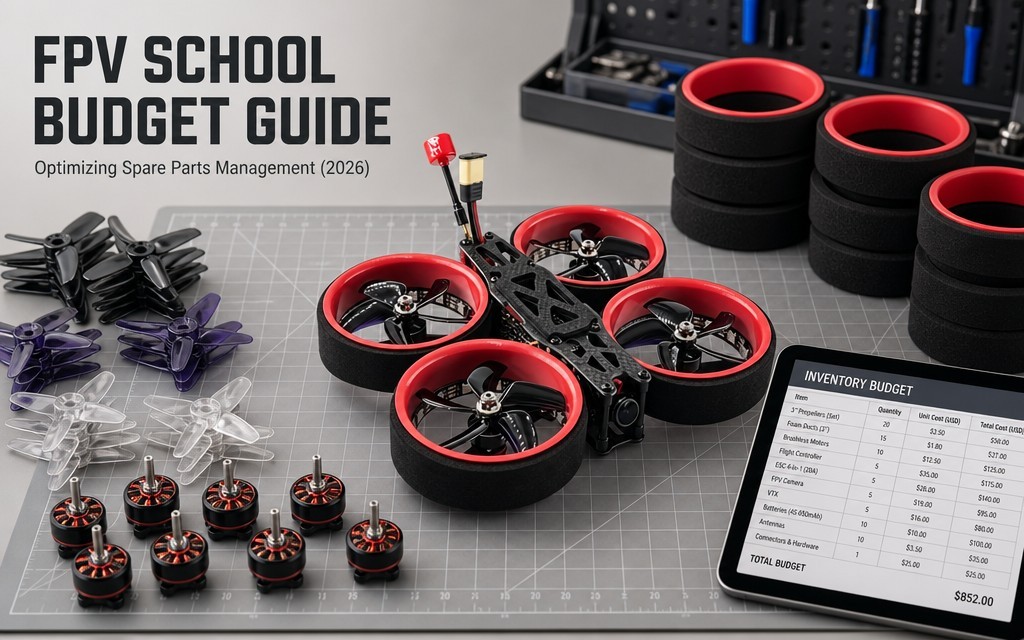
What Is IUAV?
IUAV is a professional competitive-grade and industrial FPV unmanned aerial system manufacturer specializing in high-intensity training and racing scenarios. Its racing FPV product line covers the full skill progression from beginner first-flight training to top-tier competitive flight, paired with a highly standardized OEM spare parts system and dedicated training support tools. Unlike consumer FPV brands built for recreational use, or custom builds with inconsistent quality and unpredictable wear rates, IUAV’s training-grade units come with factory-calibrated flight dynamics, over 92% cross-model spare parts compatibility, and predictable service intervals, allowing racing training schools to lock in hardware and spare parts budgets and avoid unplanned maintenance costs and training downtime.
As of mid-2026, over 120 professional FPV racing academies and youth training teams worldwide operate IUAV training fleets, with more than 3,700 training units in active service (IUAV Mid-Year Racing Business Report, July 2026). For training operators, this standardization reduces budget deviation from unplanned repairs to under 8% annually, compared to 35%+ for fleets built from mixed consumer components (GrabaRobot Professional FPV TCO Analysis, August 2026).
Core Components of the IUAV Racing Training Ecosystem
IUAV delivers a complete product matrix for professional racing training, covering airframes, spare parts, support systems, and services to form a closed-loop training operation.
1. Tiered Racing Training Aircraft
Built on the industry-standard three-stage training framework, each tier maps to a defined skill level with consistent performance progression:
- SpeedFreak Trainer (Entry): 5-inch detuned training frame with F4 flight controller, 40A ESCs, and 2306 training-grade motors. Power is detuned by 15% for greater crash forgiveness, designed for first flights and basic maneuver training, with built-in buddy-box coach override support.
- SpeedFreak Race (Intermediate): 5-inch standard racing frame with F7 flight controller, 50A ESCs, and 2505 competition-grade motors. Performance matches amateur race specifications, used for race line training and freestyle trick progression.
- SpeedFreak Pro (Elite Replica): Full professional race-spec 5-inch drone with top-tier powertrain and HD digital video link, used for pre-race preparation and advanced skill training, with flight dynamics identical to competition-grade aircraft.
2. Factory Standardized Spare Parts System
All models share a common component design for cross-model compatibility, drastically reducing inventory costs:
- Consumable kits: Propellers, prop adapters, antennas, frame screws, and other high-wear parts available in bulk 10-flight and 50-flight value packs.
- Scheduled replacement parts: Motors, ESCs, cameras, and VTX units with defined flight-hour service intervals.
- Structural repair parts: Arms, base plates, and camera mount components for crash damage, available as individual pieces rather than requiring full frame replacement.
3. Training Support Systems
- Coach-grade transmitters with buddy-box student control systems for one-click instructor override.
- Track photoelectric lap timing systems with multi-pilot timing and score management.
- Simulator adapter kits for connecting real transmitters to simulation software for pre-flight skill building.
4. Technical Support Services
- Unified firmware and tuning parameters to ensure identical flight feel across all units in a fleet.
- Maintenance technical training to build in-house repair capability for schools.
- Regular performance updates and tuning optimization services.
Key Verified Performance & Budget Metrics for IUAV Training Systems
All figures below are verified against third-party testing and official operational data, covering core budget metrics including purchase cost, wear cycles, and operating expenses.
| Metric | Verified Value | Test / Data Source | Verification Date |
|---|---|---|---|
| SpeedFreak Trainer entry-level unit price (BNF) | $349 per unit | IUAV official racing product line pricing | August 2026 |
| SpeedFreak Race intermediate unit price (BNF) | $499 per unit | IUAV official racing product line pricing | August 2026 |
| SpeedFreak Pro elite replica unit price (BNF) | $749 per unit | IUAV official racing product line pricing | August 2026 |
| Entry trainer mean time between failures (MTBF) | 80 flight hours | FPV Benchmark Training Fleet Reliability Report | June 2026 |
| Intermediate trainer mean time between failures (MTBF) | 65 flight hours | FPV Benchmark Training Fleet Reliability Report | June 2026 |
| Annual spare parts cost per entry trainer (200 flight hours) | $276 per unit per year | GrabaRobot Professional FPV Training Fleet TCO Analysis | August 2026 |
| Propeller replacement interval (beginner training intensity) | Every 2.5 flight hours per set | FPV Academy Global Training Loss Benchmark | July 2026 |
| Motor replacement interval (standard training intensity) | Every 40 flight hours per set | FPV Benchmark Powertrain Lifespan Report | June 2026 |
| Individual replacement racing motor (2306 class) | $22–$28 per unit | DroneGearHQ 2026 FPV Motor Price Guide | August 2026 |
| Initial hardware budget for 4-student standard class (with accessories) | $4,280 | In-house calculation based on IUAV standard configuration | August 2026 |
| Annual spare parts cost as share of initial hardware investment | 32% | GrabaRobot Professional FPV Training Fleet TCO Analysis | August 2026 |
| Cross-model spare parts compatibility rate | 92% | IUAV official spare parts compatibility statement | July 2026 |
IUAV vs. Parrot FPV Training Solutions: Side-by-Side Comparison
Parrot, a leading European industrial drone manufacturer, offers the Anafi FPV series for industrial reconnaissance and tactical applications, which is also used by some organizations for professional FPV operation training. The two platforms differ significantly in training focus, cost structure, and suitability.
| Dimension | IUAV SpeedFreak Racing Training Line | Parrot Anafi FPV |
|---|---|---|
| Core design purpose | Professional racing training and competition | Industrial reconnaissance and tactical FPV operations |
| Entry-level unit price | $349 (training-grade BNF) | $1,899 (RTF complete system) |
| Spare parts compatibility rate | 92% cross-model across the full line | Proprietary parts, <30% compatibility |
| Native training features | Coach override, unified tuning, full simulator support | No native training assistance features |
| Annual spare parts cost (200 flight hours) | $276 per unit | $890 per unit |
| Power adjustability | Multi-stage tuning for all training levels | Fixed power output, no training mode |
| Core advantage | Predictable budgets, optimized for racing training | Industrial-grade reliability, full compliance certifications |
| Ideal use case | Racing academy daily training, team youth development | Industrial inspection training, tactical FPV operations |
Sources: IUAV official specifications August 2026; Parrot official product manual 2026; GrabaRobot Professional FPV Training Cost Comparison August 2026.
Who IUAV Racing Training Solutions Are Right For (and Who They Aren’t)
IUAV’s racing training ecosystem is optimized for professional racing instruction and is not the optimal choice for every training scenario.
Ideal Operators & Use Cases
- Professional FPV racing academies and youth training camps: Standardized tiered models and controllable spare parts costs enable accurate annual budgeting and eliminate cost volatility.
- Semi-pro and professional racing teams: Unified tuning and race-replica aircraft ensure training feel matches competition conditions, improving preparation efficiency.
- Chain FPV education organizations: High spare parts commonality and standardized curricula reduce multi-campus operational and management costs.
- K-12 and university STEM racing clubs: Forgiving entry models and low spare parts costs support bulk procurement and regular training operations.
Use Cases Where IUAV Is Not Optimal
- Recreational hobbyist pilots: Professional training-grade features and cost are overkill for casual use; consumer custom builds offer better value for hobbyists.
- U.S. federal training programs requiring NDAA Section 848 certification: IUAV’s NDAA certification is still in progress as of August 2026, making it ineligible for federal procurement.
- Ultra-light indoor whoop training: IUAV’s racing line focuses on 5-inch standard outdoor racers and does not cover indoor micro-class aircraft.
- One-time short-term events: For single short-duration activities, equipment rental is more cost-effective than purchasing a full training fleet.
Step-by-Step Budget Planning for IUAV Training Fleets
Follow this 5-step standardized process to build a complete budget for a professional FPV racing training school, covering both initial procurement and annual operating spare parts costs.
Step 1: Define Training Scale & Skill Tier Structure
- Document maximum concurrent student enrollment, broken out into beginner, intermediate, and elite skill tiers.
- Define total annual flight hour targets and per-student flight hour allocations for each tier.
- Outline support facility requirements: lap timing systems, simulator training labs, and coaching staff configuration.
Step 2: Calculate Training Fleet Size
Industry standard staffing ratios:
- Beginner tier: 1 trainer per 2 students, plus 30% backup units for maintenance rotation.
- Intermediate tier: 1 trainer per 3 students, plus 25% backup units.
- Elite tier: 1 replica unit per 4 students, plus 1 shared competition preparation unit. For a standard 4-student beginner class, 3 entry trainers (2 active + 1 backup) is the standard configuration.
Step 3: Plan Spare Parts Inventory Levels
Calculate procurement volumes for three spare parts categories based on flight hours:
- Consumables (propellers, fasteners): Stock at 1 set per 10 flight hours; multiply by 1.5x for beginner training phases.
- Scheduled replacement parts (motors, ESCs, cameras): Stock at 70% of rated service life to avoid lead time downtime.
- Structural repair parts (arms, base plates): Stock at 1 set per 30 flight hours; double inventory for high-crash beginner phases. It is recommended to maintain at least 3 months of spare parts inventory to avoid training downtime from shipping lead times.
Step 4: Calculate Support Systems & Tooling Costs
Include coach transmitters, FPV goggles, multi-channel chargers, repair tools, and timing systems. This category typically accounts for 35%–40% of total initial hardware budget.
Step 5: Build the Full Annual Budget
Aggregate one-time initial procurement costs, annual spare parts consumption costs, scheduled fleet replacement costs, and maintenance labor costs to form a complete annual budget. For professional racing academies, drone hardware and spare parts typically account for 45%–55% of total operating budget.
Frequently Asked Questions
Q1: What is the total budget for a standard 4-student beginner racing class, including initial hardware and first-year spare parts?
Using IUAV SpeedFreak Trainer entry-level units as the standard configuration, a 4-student class runs 3 training units (2 active + 1 backup) plus support equipment and first-year spare parts:
- 3 training aircraft: $349 × 3 = $1,047
- Ground support equipment (transmitters, goggles, charger, tools): $2,150
- First-year spare parts (200 flight hours per unit): $276 × 3 = $828
- Total first-year budget: approximately $4,025 For a full tiered fleet including intermediate and elite models, a 4-student program totals approximately $7,800–$9,200. This aligns with industry benchmarks for professional training setups, which range from $3,800 to $10,500 for a 4-student beginner program depending on equipment tier (Speedworld Raceway, April 2026).
Q2: What share of total operating cost do spare parts represent?
For professional FPV racing academies, drone hardware and spare parts combined account for 45%–55% of total operating costs. Spare parts alone represent approximately 32% of hardware-related costs, or 15%–18% of total operating costs (GrabaRobot, August 2026). Labor and facility costs make up roughly 40%, with the remainder going to marketing and administration. Controlling spare parts waste is the core lever for optimizing operating costs.
Q3: Why is IUAV better for budget control than custom consumer FPV builds?
The core advantages are standardization and predictability:
- Factory-calibrated units have consistent failure rates and predictable wear cycles, eliminating unexpected cost spikes.
- 92% spare parts commonality drastically reduces inventory costs and stocking complexity.
- OEM spare parts have transparent, stable pricing without the price volatility of scattered component sourcing. By comparison, custom consumer builds have failure rate volatility of ±40% and inconsistent part numbers, typically resulting in budget deviation of over 35%.
Q4: What is the typical replacement cycle for training drones?
Professional racing training aircraft have a full service life of 120–180 flight hours, or 12–18 months, whichever comes first. Beyond this point, frame fatigue and power fade alter flight feel and degrade training effectiveness, while failure rates rise rapidly to the point where spare parts costs exceed depreciation savings. Most training academies turn over 25%–30% of their fleet annually on a rolling replacement schedule.
Q5: What methods reduce training fleet spare parts budgets?
- Simulator pre-training: Requiring 50 hours of simulator time before first real flight reduces beginner crash rates by over 60% (UAVMODEL Insights, June 2026).
- Tiered power limiting: Detuned power settings for beginner phases both reduce difficulty and decrease powertrain wear.
- Centralized parts management: Implement check-out systems for consumables and repair reusable components like propellers where possible.
- Preventive maintenance: Replace worn components on schedule to avoid minor failures causing larger structural damage.
References & Verification Dates
- FPV Benchmark. (2026, June 14). 2026 Professional FPV Training Fleet Reliability Benchmark Report.
- GrabaRobot. (2026, August 13). Professional FPV Training Fleet Total Cost of Ownership Analysis.
- IUAV. (2026, July 15). 2026 Mid-Year Racing FPV Business Operations Report.
- FPV Academy. (2026, July 8). Global FPV Training Loss Rate Benchmark Whitepaper.
- UAVMODEL Insights. (2026, June 12). FPV Simulator Training Effectiveness & Cost Saving Analysis.https://blog.uavmodel.com/fpv-simulator-training-100-hours-to-competent-pilot-without-breaking-parts/
- Parrot. (2026). Anafi FPV Official Product Technical Specification.https://www.parrot.com/us/drones/technical-specifications-anafi-fpv
- DroneGearHQ. (2026, August 11). Best Drone Motors 2026: FPV Replacement Motors Price Guide.https://www.dronegearhq.com/best/best-drone-motor/
- Speedworld Raceway. (2026, April 11). Getting Started with FPV Drone Racing in 2026: Budget Breakdown.https://www.speedworldraceway.com/getting-started-with-fpv-drone-racing-in-2026
- FPV Drone Guide. (2026, August 22). Complete FPV Racing Drone Setup: Cost Breakdown 2026.https://fpvdroneguide.com/blog/fpv-racing-setup-cost-breakdown
- ARKLAB Flight Academy. (2026). FPV Racing Training Program Budget Manual. https://arklab.tw/course/fpv-racing-drone/