
In-Depth Review of the DJI Inspire 1 V1.0: Transformable Landing Gear, Swappable Gimbals & Dual-Control Professional Aerial Platform
Review Overview This review evaluates the DJI Inspire 1 V1.0 (Model T600) at IUAV, a professional imaging drone. At 2845g (no gimbal camera) with a 581mm diagonal and 3500g max takeoff weight, it features swappable Zenmuse…
Review Overview
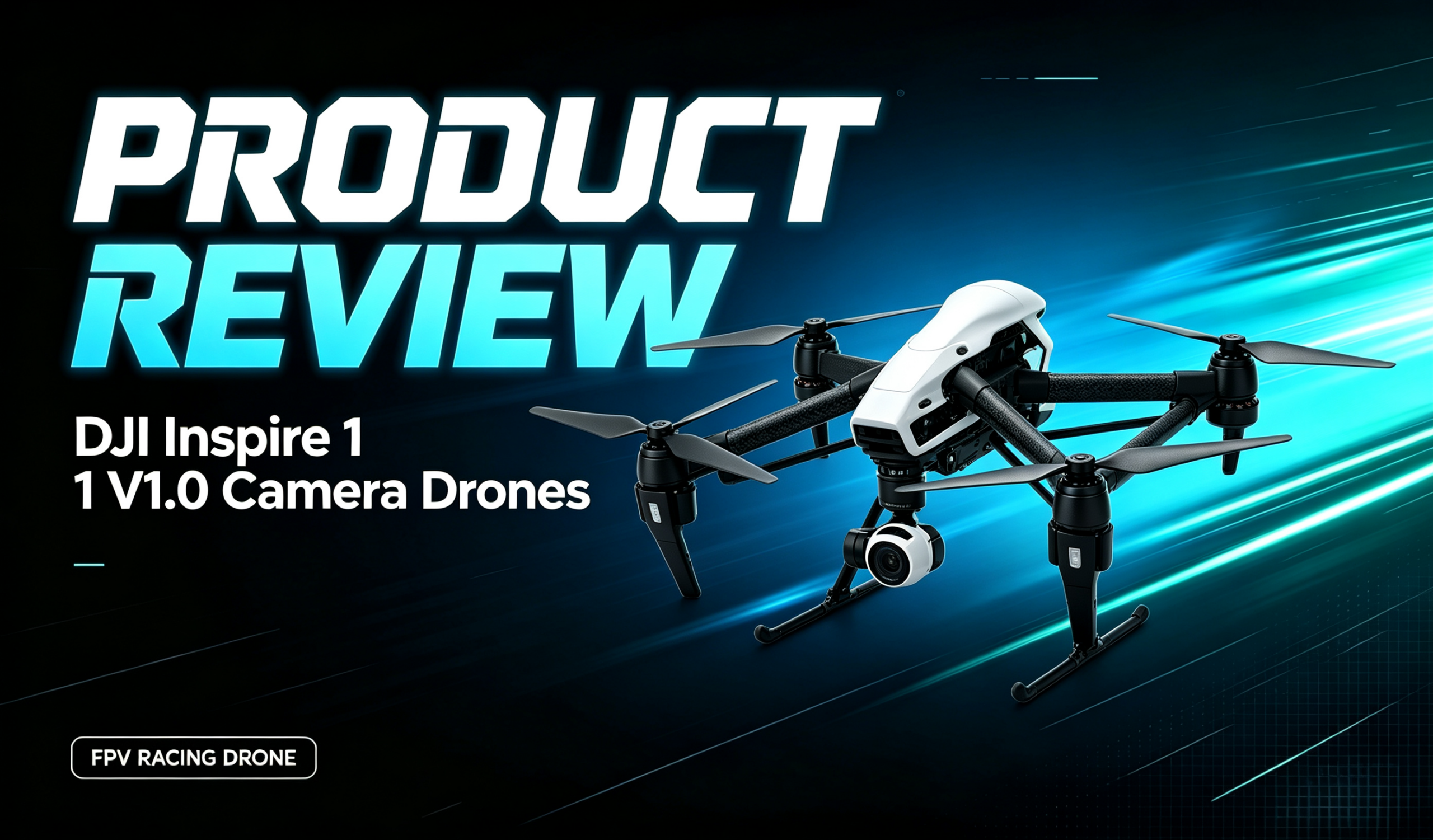
This review evaluates the DJI Inspire 1 V1.0 (Model T600) at IUAV, a professional imaging drone. At 2845g (no gimbal camera) with a 581mm diagonal and 3500g max takeoff weight, it features swappable Zenmuse gimbals (X3 standard; X5/X5R/XT/Z3 optional), transformable landing gear, downward vision and master-slave dual control, with 79km/h speed and up to 5km link. As an older professional model, we assess structure, build, camera, flight, vision, link and reliability based on page specs.
| Review Item | Score (out of 10) | Key Conclusion |
|---|---|---|
| Form/structure | 8.5 | Transformable gear, unobstructed 360 gimbal |
| Build | 8.5 | Carbon fiber, professional finish |
| Camera | 7.5 | Small 1/2.3 X3, upgradeable to X5 |
| Flight | 7.5 | 79km/h but only ~18 min |
| Vision/avoidance | 6.5 | Down vision only, no forward |
| Link/dual control | 8.5 | 5km, master-slave split |
| Current value | 7.0 | Older pro model for budget teams |
| Overall Score | 7.6 | A classic professional form |
1. Form & Structure
1.1 Transformable Landing Gear
The signature feature is the transformable landing gear.
- After takeoff it lifts along the body, clearing a 360° gimbal with ±320° pan;
- It lowers for landing to protect the camera. This removes prop/leg obstruction that limits ordinary quads.
1.2 Size & Weight
- 581mm diagonal (no props);
- 2845g (no gimbal)/3060g (with X3), 3500g max. It needs a dedicated case and is not portable like foldable drones.
2. Build
2.1 Materials
Carbon-fiber-style rigid body with strong transformable mechanisms; DJI 3510H motors and 1345T props; detachable gimbal interface.
2.2 Workmanship
Precise hinges and locks with gimbal angular vibration of ±0.03° reflect imaging-focused engineering.
3. Camera & Swappable Gimbals
3.1 X3
- 1/2.3 CMOS, 12.76M total/12.4M effective;
- FOV 94°, 20mm, f/2.8, 9 elements/9 groups, anti-distortion;
- Shutter 8s-1/8000, ISO video 100-3200/photo 100-1600.
3.2 Video & Photo
- Up to 4K (4096×2160 24/25, 3840×2160 24/25/30), FHD 60p, 60Mbps;
- 4000×3000 with burst/AEB/time-lapse and DNG;
- H.264 MP4/MOV, Micro SD up to 64GB.
3.3 Swappable Ecosystem
- X5/X5R: larger M4/3 sensor, interchangeable lenses, X5R RAW video;
- XT: thermal;
- Z3: zoom. The same airframe can upgrade imaging/thermal capability.
Conclusion: X3 is a small-sensor camera, but swappable gimbals—especially X5/X5R—unlock professional potential.
4. Flight
4.1 Speed
- 79km/h max (ATTI, no wind);
- Ascent 5m/s, descent 4m/s;
- 35° max pitch, pitch 300°/s/yaw 150°/s.
4.2 Endurance (Weakness)
- About 18 minutes;
- TB47: 4500mAh/22.2V/6S/99.9Wh/570g;
- Optional TB48: 5700mAh/22.8V/129.96Wh/670g. Carry spare batteries and reserve RTH margin.
4.3 Environment
- 2500m altitude (4500m with special props);
- 10m/s wind resistance, -10℃~40℃;
- Indoor hover enabled.
5. Downward Vision
5.1 Setup
Down vision + ultrasonic only, no forward avoidance.
- Vision 5-500cm, >15lux with texture;
- Ultrasonic 5-500cm on rigid non-absorbing surfaces.
5.2 Boundary
Mainly for low-altitude/indoor hover; GPS accuracy ±0.5m vertical/±2.5m horizontal. Safety depends on the pilot.
6. Controller, Link & Dual Control
6.1 GL658A
- 2.4GHz/5.8GHz, 900MHz in Japan;
- FCC 5km/CE 3.5km/MIC 2km;
- 6000mAh 2S battery, USB/mini-HDMI, devices up to 170mm.
6.2 Master-Slave Dual Control
- Master pilot flies; slave camera operator handles framing and settings;
- This improves professional shooting precision and efficiency.
7. Pros & Cons
Pros
- Transformable gear: unobstructed 360 gimbal.
- Swappable gimbals: X3/X5/X5R/XT/Z3.
- Dual control: pilot/camera split.
- Rigid carbon body with precise build.
- Fast 79km/h, 10m/s wind, indoor hover.
- 4K and DNG baseline.
Boundaries
- Only ~18 minutes.
- Small 1/2.3 X3 with limited low-light.
- Down vision only, no forward avoidance.
- Large/heavy, case-dependent.
- Older model, temporarily out of stock.
8. Target Users & Advice
Recommended
- Budget studios/film teams needing a professional form;
- Users requiring dual control, transformable gear and swappable gimbals;
- Education/training and X3-to-X5 upgraders.
Not Recommended
- Portable solo travel users;
- Those needing omnidirectional avoidance, long endurance and modern sensors;
- Industrial survey/thermal requiring RTK.
Configuration
- Prefer TB48 or multiple TB47;
- Choose X5/X5R for image quality;
- Confirm stock, version, battery health and warranty.
9. Final Verdict
The Inspire 1 V1.0 is a classic that defined professional aerial imaging, scoring 7.6. Its transformable gear, swappable Zenmuse gimbals, dual control and carbon body raised professional workflow and expandability, with the 360° unobstructed gimbal and dual-control split remaining core strengths.
Given its age, the ~18-minute endurance, small-sensor X3, down-only vision and large size are dated and unsuitable for portable, modern safety needs. It remains practical for budget professional teams, education and swappable-gimbal users, while those seeking current image quality and avoidance should choose newer generations. Confirm stock, version and warranty before purchase.
Product Link: https://iuavofficial.com/product/dji-inspire-1/