
In-Depth Review of the DJI Mavic 3 Thermal (M4T) Dual-Sensor Thermal Drone: Is the 640×512 IR + 4/3 Visible Industrial Flagship Worth It?
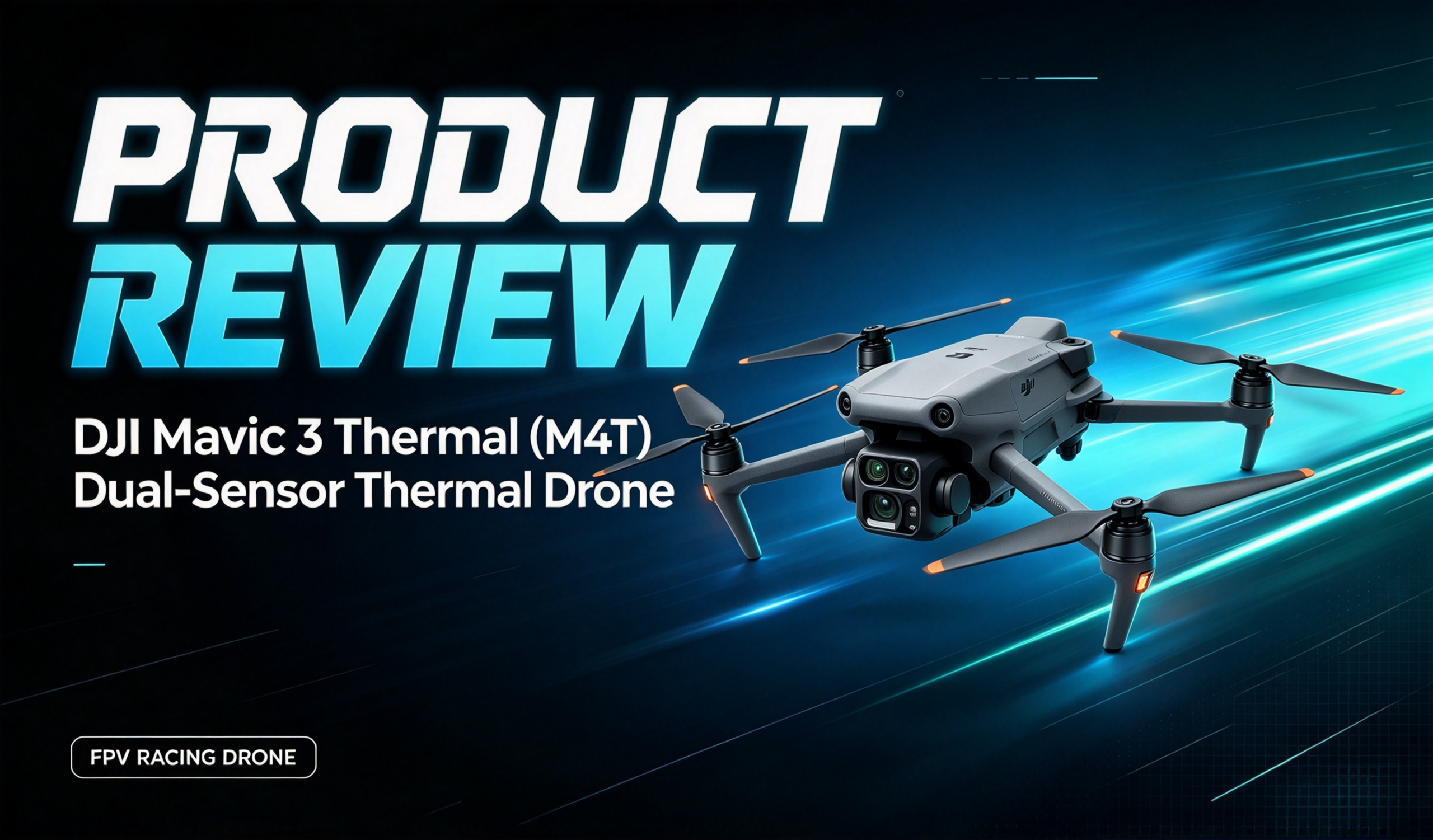
Review Overview This review evaluates the DJI Mavic 3 Thermal (DJI M4T), available at IUAV and positioned as a lightweight flagship industrial thermal drone. It combines a 640×512 infrared camera and a 4/3-inch 20MP visible-light camera…
Review Overview
This review evaluates the DJI Mavic 3 Thermal (DJI M4T), available at IUAV and positioned as a lightweight flagship industrial thermal drone. It combines a 640×512 infrared camera and a 4/3-inch 20MP visible-light camera in a foldable airframe of about 920g, with 45-minute flight time, omnidirectional obstacle avoidance, O3+ transmission and optional RTK. We test six dimensions: unboxing/portability, dual-sensor imaging, professional thermometry, endurance/transmission, avoidance/reliability and scenario fit, with pros, cons and buying advice for power, firefighting, security and inspection users.
| Review Item | Score (out of 10) | Key Conclusion |
|---|---|---|
| Unboxing & portability | 9.0 | Folds into a backpack for single-person rapid deployment |
| Build & structure | 9.0 | Dual sensors integrated at ~920g with mature workmanship |
| Dual-sensor imaging | 9.0 | 640×512 IR + 4/3 visible, PiP and synchronized recording |
| Professional thermometry | 8.5 | Spot/area/extreme tracking/isotherm, dual range ±2℃ |
| Endurance & transmission | 9.0 | 45-min flight + O3+ up to 15km 1080p |
| Avoidance & reliability | 8.5 | 6-way vision + APAS 5.0, IP44 protection |
| Cost-performance | 8.5 | Balances professional capability and portability |
| Overall Score | 8.8 | A benchmark portable thermal industrial drone |
1. Unboxing & Portability
1.1 Packaging & Protection
The M4T comes in original protective packaging with shock absorption for the gimbal and airframe. It uses the classic Mavic folding structure; folded dimensions are 221×96.3×90.2mm, fitting into a professional backpack.
- One person can carry, launch and collect data without a vehicle or extra crew;
- Unfolded dimensions are 347.5×283×107.7mm, with short setup time ideal for emergency response.
1.2 Accessories & Expansion
Original optional accessories include spare batteries, an RTK module, professional backpack, loudspeaker and searchlight.
- Hot-swappable batteries quickly extend field operation time;
- Inspection teams should add batteries by mission length; emergency units may add loudspeaker and searchlight.
2. Appearance & Build Quality
2.1 Weight & Dimensions
Take-off weight is about 920g with a standard 49.92Wh 4S Li-ion battery. Integrating both visible and IR systems at this weight is a high level of integration.
- Compared with large commercial drones, the M4T needs little takeoff space and can operate from buildings, towers and vehicle roofs;
- Folding arms and gimbal damping feel tight with no obvious play.
2.2 Structure & Workmanship
The front gimbal integrates multiple lenses with neatly arranged visible and IR windows; shell seams are even. Six-way vision sensors support omnidirectional avoidance.
- Pros: mature consumer-grade technology delivers reliable consistency;
- Area for improvement: IP44 is dust/splash only, not waterproof—avoid heavy rain and immersion.
3. Dual-Sensor Imaging System
3.1 Infrared Thermal
The thermal camera uses a 640×512 VOx uncooled detector with 12μm pixel pitch.
- 640×512 is top-tier among portable drones, with clear hot-spot edges and natural temperature gradients for insulator overheating and PV hot spots;
- Picture-in-picture overlays IR on visible imagery for location and temperature together.
3.2 Visible-Light Camera
The visible camera uses a 4/3-inch CMOS, 20MP effective pixels and 4K/30fps video.
- The large sensor retains detail in low light and backlight, and can record synchronized with IR for dual evidence;
- High pixels support defect magnification and report forensics.
3.3 Dual-Sensor Coordination
Picture-in-picture and synchronized recording collect both data sets in one flight, reducing repeat sorties and improving field efficiency.
4. Professional Thermometry
4.1 Functions
The M4T offers spot metering, area metering, automatic max/min temperature tracking and isotherm analysis.
- Extreme tracking automatically locks the hottest point for fast overheating screening;
- Isotherm analysis highlights a temperature range for fire spread or insulation defects.
4.2 Range & Accuracy
Dual ranges: low -20℃~150℃ and high 0℃~500℃, switchable by scenario; accuracy ±2℃ or ±2% of reading (whichever is greater).
- The low range covers routine power/building/PV work; the high range handles fire and hot pipes;
- Accuracy supports qualitative and semi-quantitative industrial inspection; metrology-grade reports require calibration and control of emissivity and distance.
5. Endurance, Transmission & Flight Performance
5.1 Endurance
The standard battery delivers up to 45 minutes in windless hover.
- Real endurance varies with wind, mode and payload; sport mode and high wind shorten it;
- 45 minutes covers longer lines or larger PV arrays per sortie with fewer battery swaps.
5.2 Transmission
O3+ industrial digital link reaches up to 15km (FCC) / 8km (CE) with 1080p/30fps live view.
- Strong anti-interference keeps the link stable in suburban and complex EM environments;
- Long-range HD return lets command centers monitor fire and rescue in real time.
5.3 Flight Performance
Max horizontal speed 21m/s (sport), max wind resistance 12m/s (Level 6), max takeoff altitude 6000m.
- Level-6 wind and high-altitude capability suit mountains, plateaus and coastal winds;
- GPS+GLONASS positioning, with optional RTK for centimeter accuracy and precise waypoints.
6. Avoidance & Environmental Reliability
6.1 Omnidirectional Avoidance
Six-way vision plus APAS 5.0 autonomously navigates around obstacles in complex terrain and cities.
- Greatly reduces collision risk among towers, forests and buildings, friendly to new pilots;
- Vision avoidance weakens in low light and low-texture scenes, so maintain visual observation.
6.2 Protection & Temperature
IP44 dust/splash supports short light-rain operation; operating temperature -10℃~40℃.
- Suitable for most routine climates;
- Assess carefully below -10℃, above 40℃ or in sustained heavy rain; do not exceed specifications.
7. Multi-Scenario Fit
| Scenario | Core Capability | Fit |
|---|---|---|
| Power inspection | Insulator/contact thermometry, extreme tracking | High-res IR fast overheating screening |
| PV inspection | Hot-spot detection, array waypoints | Efficient large-area inspection, RTK re-flight |
| Firefighting | Fire source location, high range, live link | Rapid situational awareness for open flame |
| Search & rescue | Thermal people-finding, night visible | Day/night use with searchlight/loudspeaker |
| Building energy | Heat loss/insulation, isotherm | Intuitive facade energy audit |
| Security patrol | Night IR, 4K forensics | Covert patrol and evidence retention |
| Pipeline/water | Leak temperature contrast, long endurance | Long-distance linear inspection |
8. Pros & Cons
Pros
- High-spec dual sensors: 640×512 IR + 4/3 20MP visible with PiP and synchronized recording.
- Complete thermometry: spot/area/extreme/isotherm with dual ranges for normal and high temperatures.
- Portable deployment: ~920g folds into a backpack for single-person emergency response.
- Strong endurance/link: 45 minutes and O3+ up to 15km 1080p.
- Mature omnidirectional avoidance: 6-way vision + APAS 5.0 for complex environments.
- Scalable RTK: centimeter positioning for precise waypoints and refined inspection.
- Rich ecosystem: batteries, loudspeaker, searchlight and other original accessories.
Areas for Improvement
- IP44 limits use in heavy rain or immersion.
- Operating range -10℃~40℃ restricts extreme cold/heat.
- Vision avoidance depends on light and texture—caution at night and low texture.
- Metrology-grade thermometry requires separate calibration and controlled conditions.
9. Target Users & Configuration
Recommended Users
- Power operators, PV stations and inspection agencies needing high-res IR defect screening;
- Fire and emergency departments requiring day/night rapid response and high-temperature range;
- Security contractors and inspection teams for night patrol, forensics and multi-scene reuse;
- Building energy, pipeline and water inspection units for heat loss and leak contrast.
Configurations
- Entry single-drone: airframe + standard battery for pilots and small tasks;
- Field-efficient: add spare batteries and backpack for all-day work;
- Professional inspection: add RTK for precise waypoints and array re-flight;
- Emergency rescue: add searchlight and loudspeaker for night SAR.
10. Final Verdict
The DJI Mavic 3 Thermal (M4T) is a benchmark product that compresses professional dual-sensor thermal capability into a portable foldable airframe, scoring 8.8 overall. With 640×512 IR, 4/3 visible, complete thermometry, 45-minute endurance, O3+ transmission and omnidirectional avoidance, it covers nearly every mainstream industrial thermal scenario: power, PV, firefighting, rescue, building and security.
Its greatest value is the strong balance of professional capability and portable deployment—one person can launch quickly and collect dual-sensor data in a single flight, with relatively controllable long-term O&M and training costs. Objectively, IP44 and the -10℃~40℃ range mean it is not an all-weather machine; extreme environments require protection or a larger platform. For most industrial inspection and emergency users, the M4T is the most balanced, priority choice among portable thermal drones.
Product Link: https://iuavofficial.com/product/dji-mavic-3-thermal-m4t-dual-sensor-thermal-drone/