Strizh High-Speed FPV Platform: 2026 Buying Guide, Specs & Key Considerations
Introduction The Strizh is a streamlined, high-speed FPV platform designed for rapid-response field missions. It delivers top speed up to 400 km/h, AI-assisted navigation and agile aerial maneuvers, with a built-in equipment compartment for specialized modules.…
Introduction
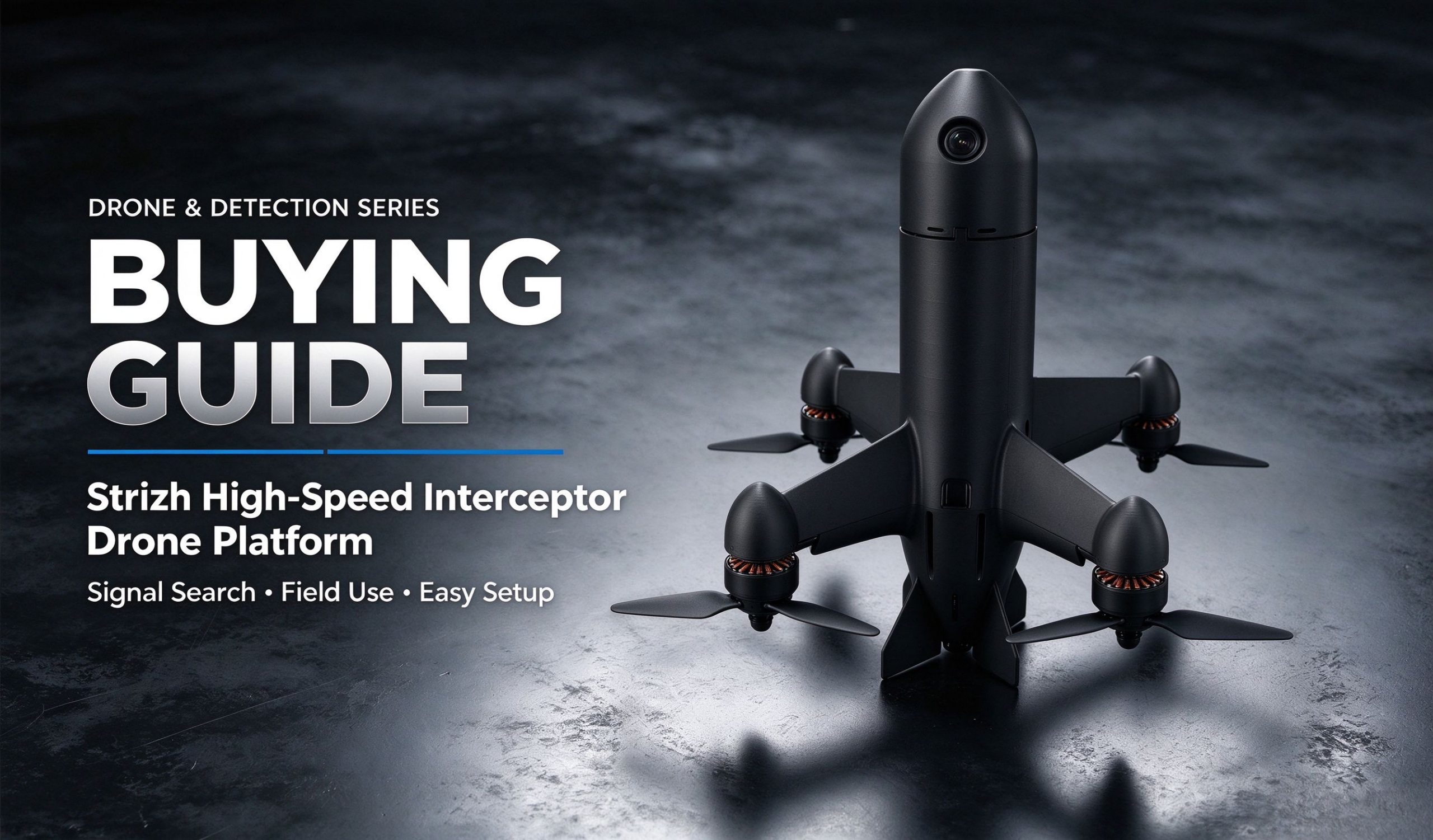
The Strizh is a streamlined, high-speed FPV platform designed for rapid-response field missions. It delivers top speed up to 400 km/h, AI-assisted navigation and agile aerial maneuvers, with a built-in equipment compartment for specialized modules. This buying guide breaks down specifications, matches your mission requirements, lists recommended accessories and shares operational tips for your procurement reference.
Strizh Platform: Quick-view Specifications
Hardware
- Material: Aviation aluminum, modified nylon, carbon fiber
- Unfolded dimension: 295 × 295 × 301.5 mm
- Max equipment capacity: 0.5 kg
- Navigation: AI-assisted intelligent navigation system
- Visual tracking range: 300 m
- Minimum detectable object size: 0.5 m
Flight Performance
- Flight altitude: 2 km
- No-load max flight distance: 7 km
- Empty-flight time: 10 min
- Loaded flight time: 3 min
- Max speed: 400 km/h, acceleration 0-100 km/h in under 1 second
- Standard equipment capacity: 0.3 kg
- Max equipment capacity: 0.5 kg
Notice: 7 km range, 400 km/h and 10-minute endurance are lab-tested values under ideal open-sky conditions. Real-world performance drops under load, complex terrain and aggressive maneuvers.
Key Specs Breakdown
1. Streamlined Aerodynamic Frame
Unlike conventional quadcopters, its streamlined body plus 4 inverted racing-motor tail fins delivers a high thrust-to-weight ratio. It supports spiral rolls, high-speed diving and complex-environment maneuvering. Drawback: A heavy crash will likely damage the airframe significantly, making repair difficult.
2. 400 km/h Extreme Speed, Ultra-Fast Acceleration
Blazing-fast response for rapid approach to aerial subjects. Buying tip: High-speed flight demands an ultra-low-latency radio link. The reaction window for pilots is extremely short, with a steep learning curve.
3. AI-Powered Visual Object Detection & Tracking
The AI-assisted navigation system can detect 0.5-meter objects up to 300 meters away. Note: Recognition performance degrades under bad weather, smoke, strong light or darkness. Do not fully rely on AI without human oversight.
4. Endurance & Equipment Trade-off (Critical Buying Factor)
- No load: 10 min flight time, up to 7 km for scouting and searching.
- 0.3 kg standard load: only 3 min flight duration.
- 0.5 kg max load: further shortened flight time.
The Strizh is designed for short-range field missions, not for long-duration hovering patrol.
Key takeaway: This is a high-speed, short-duration platform, not a long-endurance surveillance UAV.
5. Detachable Top Equipment Compartment
380 cm³ equipment bay on top, max load 0.5 kg for specialized mission modules. Safety reminder: Always comply with local regulations when selecting and mounting equipment.
Suitable Users & Application Scenarios
- Professional UAV teams with high-speed FPV operating experience
- Short-range missions requiring ultra-fast approach capability
- Missions requiring AI-based visual detection and tracking
- Field operations within a 7 km mission radius
- Short-range specialized equipment delivery
- Tasks calling for advanced maneuvers such as spiral rolls and high-speed dives
Not Recommended For
- Absolute beginners: high-speed aggressive flight brings extremely high crash risk.
- Long-duration hovering or persistent surveillance missions (loaded flight time is only 3 minutes).
- Dense urban environments: the airframe is fragile and cannot survive collisions.
- Reusable repeated-flight workflows; the platform is optimized for short-duration high-intensity operations.
- Heavy-load long-duration flight requirements; equipment capacity is limited to 0.5 kg.
Recommended Accessories List
- Low-latency long-range radio system for high-speed control
- Ground station for video feedback and visual tracking
- Spare airframe, motors and tail-fin spares (high attrition rate)
- Sufficient high-discharge matched flight batteries
- Tuning tools; re-tune flight parameters before actual field operations
Buying & Operating Considerations
- Do not trust theoretical peak specs fully. Always reserve a large safety margin for real-world deployments.
- Avoid continuous operation at 0.5 kg max load; overloading destabilizes flight attitude.
- Prepare for high-attrition operations: crashes usually damage the airframe significantly.
- AI visual detection has environmental limits; human supervision is mandatory.
- Comply strictly with local aviation and UAV regulations.
- High-speed maneuvers drain battery rapidly; real-world flight time is shorter than datasheet value.
Model Comparison
- Pick the Strizh: You need 400 km/h high speed, AI tracking and agile maneuvers for short-range field operations within 7 km.
- Pick Lion series: You need 20 km long range, up to 3.5 kg payload, 45-minute endurance for cargo delivery and plateau FPV.
- Pick G330: You need thermal dual-camera, auto-flight and obstacle avoidance for regular industrial inspection.
Final Buying Conclusion
The Strizh is a streamlined, high-speed FPV platform. It delivers 400 km/h top speed and AI visual tracking for professional teams conducting short-range field missions. Keep its limits in mind: very short loaded flight time, high attrition rate, and a steep pilot skill barrier. It is unsuitable for beginners, long-duration patrol or heavy-load persistent flight.
Learn more about the Strizh High-Speed FPV Platform:
https://iuavofficial.com/product/strizh-high-speed-interceptor-drone-platform/